You can clear a check engine light three ways: fix the fault and let the light go out on its own, clear the codes with a scan tool, or disconnect the battery. The last two turn the light off right away, but they also reset the readiness monitors an emissions inspection checks, and the light comes back if the fault is still there.
Key takeaways
- The best way to turn off the light is to fix what set it. Federal rules let the light go out after three trips without the fault.
- A scan tool clears codes instantly, but also resets readiness monitors to "not ready."
- Disconnecting the battery does much the same, and can also erase radio presets, the clock and other settings.
- Clearing right before an inspection usually backfires. Ohio's E-Check rejects cars whose monitors aren't ready, and California fails cars with permanent codes that clearing can't remove.
- Never clear a flashing light and keep driving. It hides an active misfire.
Three Ways the Light Goes Off
| Method | What it does | Light stays off? | Monitors reset? |
|---|---|---|---|
| Fix the cause, then drive | The computer stops seeing the fault and turns the light off after three clean trips | Yes, if the fix worked | No |
| Scan tool "clear codes" | Erases the codes and turns the light off now | Only if the fault is really gone | Yes |
| Disconnect the battery | Usually erases codes and the light | Only if the fault is really gone | Yes, plus other settings |
The first method is slower but needs nothing from you except the repair. The federal OBD rule, 40 CFR 86.1806-05, says the light "may be extinguished if the malfunction does not reoccur during three subsequent sequential trips." That's what happens after you tighten a loose gas cap or replace a failed sensor: drive normally and it goes out.
Clearing With a Scan Tool
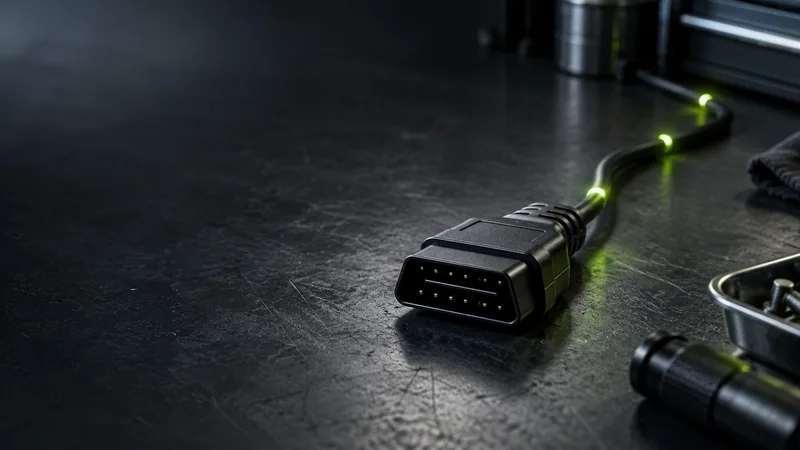
Every OBD-II scan tool, even a basic plug-in reader or a phone app with a Bluetooth adapter, has a clear or erase function. Under the hood it sends a standard OBD request that clears diagnostic trouble codes and their stored values.
The usual steps:
- Read and write down every code first, including pending ones. Once cleared, they're gone.
- Turn the ignition on with the engine off, unless your tool says otherwise.
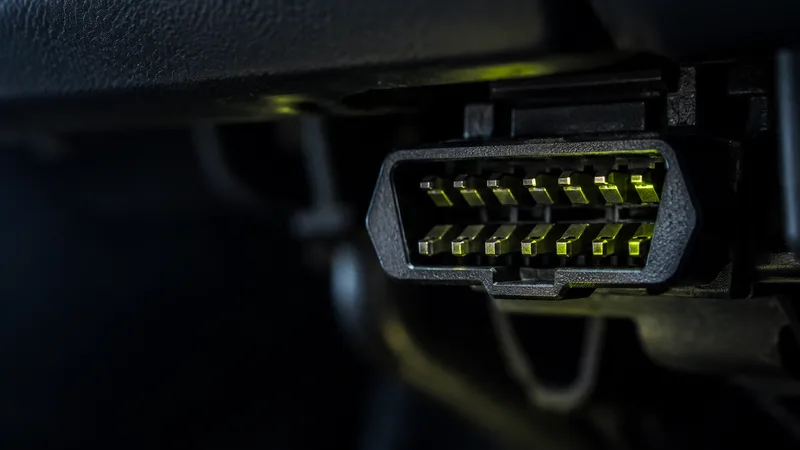
- Connect the tool to the diagnostic port low under the driver's side of the dash.
- Choose "Erase codes" or "Clear DTCs" and confirm.
- Start the engine and check that the light stays off.
If the light comes straight back on, the fault is still active. If it comes back a few days later, the fault was confirmed again on later drives. Either way, the code told you something real.
Look up the code before clearing. Each code page on this site starts with how serious it is. Enter it in the code lookup, or read what a DTC is if the format is new to you.
Disconnecting the Battery: Caveats
Disconnecting the battery cuts power to the engine computer and usually erases its stored codes. It's the common answer to "how to clear codes without a scanner," but it comes with costs:
- Readiness monitors reset. Ohio's E-Check program and New York's DMV both list battery disconnection as a reason monitors report "not ready."
- Settings can be lost. Kia's owner's manual lists items that may need resetting after the battery is disconnected, including radio presets, the clock, climate control, automatic up/down windows and the sunroof.
- Some radios need an anti-theft code to work again. Honda's service guidance, for example, tells technicians to get the anti-theft code and note the audio presets before disconnecting. Check your owner's manual or paperwork first.
- Permanent codes survive it. California's BAR says permanent codes "cannot be erased" by disconnecting the battery.
Battery safety: follow the battery disconnection steps in your owner's manual. Hybrids and electric vehicles carry a separate high-voltage battery; never touch high-voltage components or orange cabling.
Readiness Monitors: What Clearing Really Resets
A readiness monitor is the car's record of whether it has finished a self-test since codes were last cleared. There's one for each emissions system: catalyst, oxygen sensors, EVAP, and so on. Each reports either "ready" (the test has run) or "not ready" (it hasn't yet).
Clearing codes, by either method, sets them back to "not ready." Ohio's E-Check fact sheet explains that when diagnostic data is erased, "the computer reports systems as 'incomplete' or 'not ready.'"
To get them back, you drive. Each monitor has its own conditions. Some need a cold start, some a steady highway cruise, some a fuel level in a certain range. New York's DMV says that in most cases two drive cycles are needed, separated by a cool-down period, with a mix of highway and city driving. Ohio suggests driving for about two or three days under normal conditions, and says older vehicles may take longer.
The EVAP monitor has some of the narrowest conditions, which is one reason it can lag behind the others. California's OBD regulation lets manufacturers skip the EVAP test when the tank is over 85 percent full, and lets it run only on cold starts if needed for reliable results. Our gas cap guide covers the EVAP self-test in more detail.
You can check monitor status with most scan tools. Look for a "readiness" or "I/M status" screen.
Why Clearing Before Inspection Backfires
In states that test cars through the OBD port, the inspection checks more than the light. Federal inspection rules (40 CFR 85.2222) check readiness and allow only a limited number of unset monitors:
| Model year | Unset monitors allowed (federal rule) |
|---|---|
| 1996–2000 | Two or fewer |
| 2001 and newer | No more than one |
California is stricter. Its Smog Check allows only the EVAP monitor to be incomplete on 2000-and-newer gasoline cars, and any one monitor on 1996–1999 gasoline cars.
So if you clear codes the morning of a test, the car will almost certainly have too many unset monitors. Ohio's program says such vehicles "are rejected from testing." Under the federal rule, a car that's still not ready on a retest "shall be failed."
California adds another check: permanent codes. Since July 2019, Smog Check has failed 2010-and-newer vehicles that have a permanent code, and clearing doesn't remove those. Our guide on pending, stored and permanent codes explains how they work.
The practical route is to fix the fault, drive normally until the monitors read ready, then test.
When Not to Clear the Light
- The light is flashing. A flashing light means an active misfire that can damage the catalytic converter. Clearing hides the warning without stopping the damage. Stop driving. See check engine light flashing.
- You haven't recorded the codes. You'll lose the evidence, including any snapshot of conditions saved when the fault set.
- You're heading to a shop. The technician needs the stored codes and data.
- An inspection is due soon and the monitors won't have time to reset.
- The car runs badly or overheats. The problem needs diagnosis, not a reset.
It's reasonable to clear codes after a confirmed repair, so you can see quickly whether the fix worked.
If the Light Comes Back
A light that returns after clearing is the car telling you the fault is still there. California's OBD regulation describes the usual pattern: the computer stores a pending code the first time it sees the fault, then confirms it and turns on the light if it sees the fault again on the next drive where the test runs.
Read the code again and compare it with what you wrote down. If it's the same, the repair didn't fix the cause, or the cause wasn't what it seemed. If you now have several codes, the multi-code tool shows which is likely primary. If the light went out on its own but your reader still shows a code, see check engine light off but code still there.
Questions drivers ask
How do I turn off the check engine light?
Fix the fault and the light goes out on its own once the problem stays away for three trips in a row. You can also clear it right away with a scan tool, or by disconnecting the battery, but if the fault is still there the light will come back.
Can I clear the check engine light without a scanner?
Disconnecting the battery usually clears it, but it also resets readiness monitors and can erase radio presets, the clock and other settings, according to Kia's owner's manual. The cleaner route without a scanner is to fix the cause and let the light go out on its own.
How long after clearing codes can I pass inspection?
Ohio's E-Check program suggests about two or three days of normal mixed driving, longer on older vehicles. New York says most monitors need two drive cycles separated by a cool-down. A scan tool can show you when monitors read ready.
Will clearing codes erase permanent codes?
No. California's Bureau of Automotive Repair says permanent codes can't be erased with a scan tool or by disconnecting the battery. The car clears them itself once it confirms the fault is gone.
Is it bad to clear the check engine light?
Clearing doesn't harm the car, but it erases the stored codes a technician would use and resets the inspection monitors. Never clear a flashing light and keep driving. That hides an active misfire that can damage the catalytic converter.
Sources & further reading
- dam.assets.ohio.gov — Readiness Fact Sheet https://dam.assets.ohio.gov/image/upload/epa.ohio.gov/Portals/27/echeck/docs/Readiness-fact-sheet.pdf Open source ↗
- dmv.ny.gov — 6571 https://dmv.ny.gov/node/6571 Open source ↗
- dmv.ny.gov — What Do You Mean My Cars Not Ready https://dmv.ny.gov/brochure/what-do-you-mean-my-cars-not-ready Open source ↗
- law.cornell.edu — 85.2222 https://www.law.cornell.edu/cfr/text/40/85.2222 Open source ↗
- bar.ca.gov — Obd Test Reference https://www.bar.ca.gov/obd-test-reference Open source ↗
- govinfo.gov — CFR 2012 Title40 Vol20 Sec86 1806 05 https://www.govinfo.gov/content/pkg/CFR-2012-title40-vol20/pdf/CFR-2012-title40-vol20-sec86-1806-05.pdf Open source ↗
- ownersmanual.kia.com — T00840 https://ownersmanual.kia.com/full_webhelp/MQ4a/2026/en_US/topics/t00840.html Open source ↗
- vehicleservicepros.com — Honda Battery Reset https://www.vehicleservicepros.com/tsbs/article/53094353/honda-battery-reset Open source ↗
- California Air Resources Board (CARB) — Attacha https://ww2.arb.ca.gov/sites/default/files/barcu/regact/obd02/attacha.pdf Open source ↗
- law.cornell.edu — 13 CCR 1968.2 https://www.law.cornell.edu/regulations/california/13-CCR-1968.2 Open source ↗