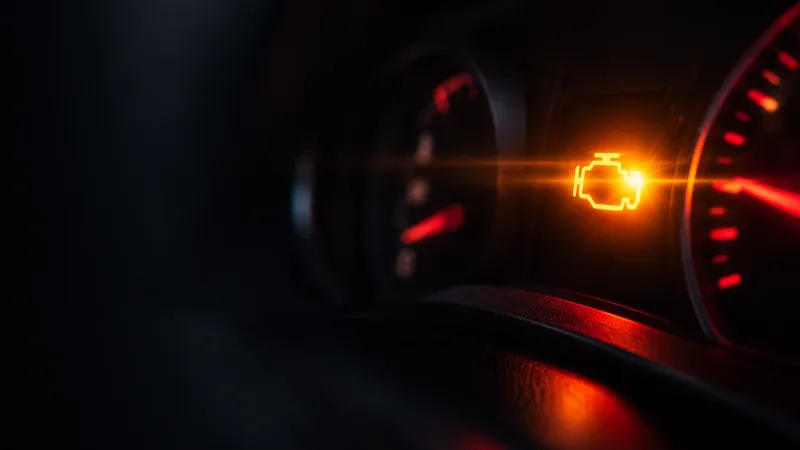
A check engine light that goes off while the code is still stored is normal OBD-II behavior. The light can go out once the fault hasn't come back for three trips in a row, but the code stays in memory until roughly 40 engine warm-ups pass without it, so a reader still finds it.
Key takeaways
- Light and code follow different rules. Federal rules let the light go out after three clean trips; the code can stay for 40 warm-up cycles.
- The fault was real. A code only becomes confirmed after the computer sees the fault again, usually on a second drive.
- It's often intermittent, so expect it to come back unless the cause was fixed (like a gas cap that's since been tightened).
- Read the code before you clear it. It's the best evidence you'll get of a fault that comes and goes.
- Permanent codes can't be cleared with a scan tool, and California's Smog Check fails 2010-and-newer cars that have one.
How the Light Goes Off While the Code Stays
The check engine light and the stored code are two separate things, and the rules treat them differently.
The light. The federal OBD rule, 40 CFR 86.1806-05, says the light "may be extinguished if the malfunction does not reoccur during three subsequent sequential trips." California's OBD regulation uses the same three-driving-cycle rule. So if a fault shows up, gets confirmed, and then doesn't show up on the next three trips where the computer checks for it, the light goes out on its own.
The code. The same federal rule says the computer "may erase a diagnostic trouble code if the same code is not re-registered in at least 40 engine warm-up cycles." Until then, the code stays in memory where any scan tool can read it.
Toyota's owner's manual gives a practical example for a loose fuel cap. Once the cap is tightened, the light goes off after several driving trips, but the code won't clear unless the car has been driven 40 or more times.
The result is a window, often dozens of drives long, where the dash looks clean but the code is still there.
Pending, Confirmed and Permanent: Which One You Have
When the light is off, your reader may show the code under one of three labels. They mean different things:
| What the tool shows | What it means | Light on? |
|---|---|---|
| Pending | Fault seen once, not confirmed yet | No |
| Confirmed / stored, light off | Fault was confirmed, then didn't come back for three trips | No |
| Permanent | A confirmed code saved in memory that a scan tool can't erase | Can be either |
California's regulation defines a pending code as one stored "upon the initial detection of a malfunction (e.g., typically on a single driving cycle) prior to illumination of the MIL." A confirmed code is stored once the computer confirms the fault, "typically on the second driving cycle that the malfunction is detected."
So if the light was never on, you probably have a pending code: the computer saw something once. If the light *was* on and went out, you have a confirmed code that has gone quiet. Our guide on pending, stored and permanent codes covers how each one sets and clears.
What It Tells You About the Fault
A code that sets, lights the lamp, and then goes quiet usually means one of three things:
- The cause was fixed. A gas cap that was loose and has since been tightened is the classic case. Codes like P0455 (large EVAP leak) fit this pattern.
- The fault is intermittent. It shows up only under certain conditions: cold mornings, a full tank, a long highway drive, a loose connection that moves. Small EVAP leaks such as P0442 and some misfires behave this way. Intermittent faults tend to return.
- The fault is near the threshold. A part that's wearing out, such as a catalytic converter close to its limit for P0420, can pass some tests and fail others.
Either way, the code is evidence. Intermittent problems are hard to find once they've gone quiet, and the stored code, along with any freeze-frame data saved with it, is the best clue you have about when it happened.
What to Do About It
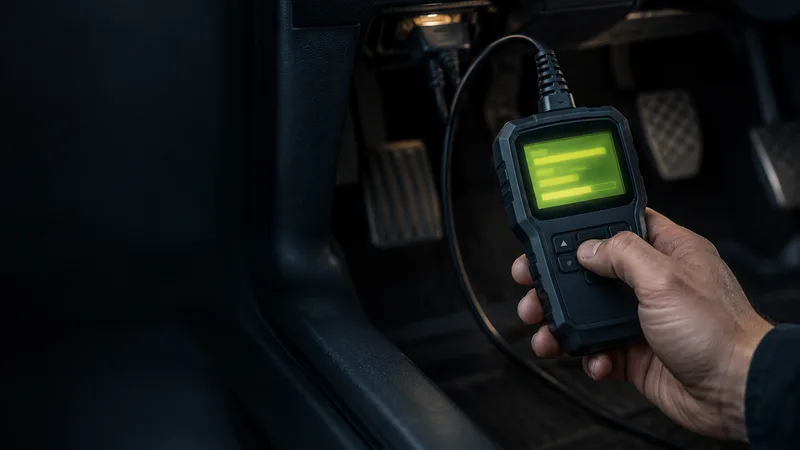
- Read and write down the code before doing anything else, including whether it's listed as pending, confirmed or permanent.
- Look it up. Each code page starts with how serious it is and what to test. Use the code lookup or the multi-code tool if there's more than one.
- Think about what changed. Did you recently refuel, tighten the cap, or have work done? That may explain a code that set and went away.
- Don't clear it just to tidy up. Clearing erases the evidence and resets the readiness monitors an inspection checks. Our guide on clearing the check engine light explains when it makes sense.
- Watch for it to return. If the light comes back, the fault is still there, and the code you wrote down tells a technician where to start.
A misfire code that's gone quiet still matters. If the light was flashing at any point, treat it as a misfire that damaged or could damage the catalytic converter, even if the dash is clear now. See check engine light flashing.
Will It Pass Inspection?
It depends on what's stored and what you did about it.
- Light off, code stored: federal inspection rules fail a car on codes "resulting in MIL illumination" and on the light being commanded on. A code that's no longer lighting the lamp is generally not that failure.
- Permanent code: California's Bureau of Automotive Repair says permanent codes "cannot be erased by clearing the DTCs with a scan tool or by disconnecting the vehicle's battery," and since July 2019 Smog Check fails 2010-and-newer vehicles that have one. BAR ignores a permanent code once the car has done at least 15 warm-up cycles and 200 miles since its codes were last cleared.
- Codes you cleared yourself: clearing resets the readiness monitors. Ohio's E-Check program says a car with monitors reporting "not ready" is rejected from testing until they complete with normal driving.
For how the light behaves in general, see the main check engine light guide.
Questions drivers ask
Why did my check engine light go off but the code is still there?
Federal OBD rules let the light go out once the fault hasn't come back for three trips in a row. The code is kept separately and can stay in memory until about 40 engine warm-ups pass without the fault, so a reader can still show it.
Do I need to fix a code if the light is off?
Usually it's worth finding out why it set. The fault was real enough to be confirmed, and intermittent faults tend to return. Some, like a gas cap that's since been tightened, are already fixed. The code tells you which kind you have.
Will a stored code with the light off fail inspection?
Federal inspection rules fail a car on codes that have the light commanded on. A code with the light off is less of a problem, but California's Smog Check fails 2010-and-newer cars for permanent codes, and clearing the codes yourself resets the readiness monitors the test also checks.
How long does a code stay after the light goes off?
Federal rules let the computer erase a code once it hasn't set again in at least 40 engine warm-up cycles. A warm-up cycle is a drive long enough for the engine to warm up properly, so it takes a good number of drives.
Sources & further reading
- govinfo.gov — CFR 2012 Title40 Vol20 Sec86 1806 05 https://www.govinfo.gov/content/pkg/CFR-2012-title40-vol20/pdf/CFR-2012-title40-vol20-sec86-1806-05.pdf Open source ↗
- law.cornell.edu — 13 CCR 1968.2 https://www.law.cornell.edu/regulations/california/13-CCR-1968.2 Open source ↗
- assets.sia.toyota.com — OM52G61U https://assets.sia.toyota.com/publications/en/om-s/OM52G61U/pdf/OM52G61U.pdf Open source ↗
- bar.ca.gov — Obd Test Reference https://www.bar.ca.gov/obd-test-reference Open source ↗
- bar.ca.gov — Permanent Diagnostic Trouble Codes https://www.bar.ca.gov/arsc/newsletters/newsletter/fall-2019/permanent-diagnostic-trouble-codes Open source ↗
- law.cornell.edu — 85.2222 https://www.law.cornell.edu/cfr/text/40/85.2222 Open source ↗
- dam.assets.ohio.gov — Readiness Fact Sheet https://dam.assets.ohio.gov/image/upload/epa.ohio.gov/Portals/27/echeck/docs/Readiness-fact-sheet.pdf Open source ↗